
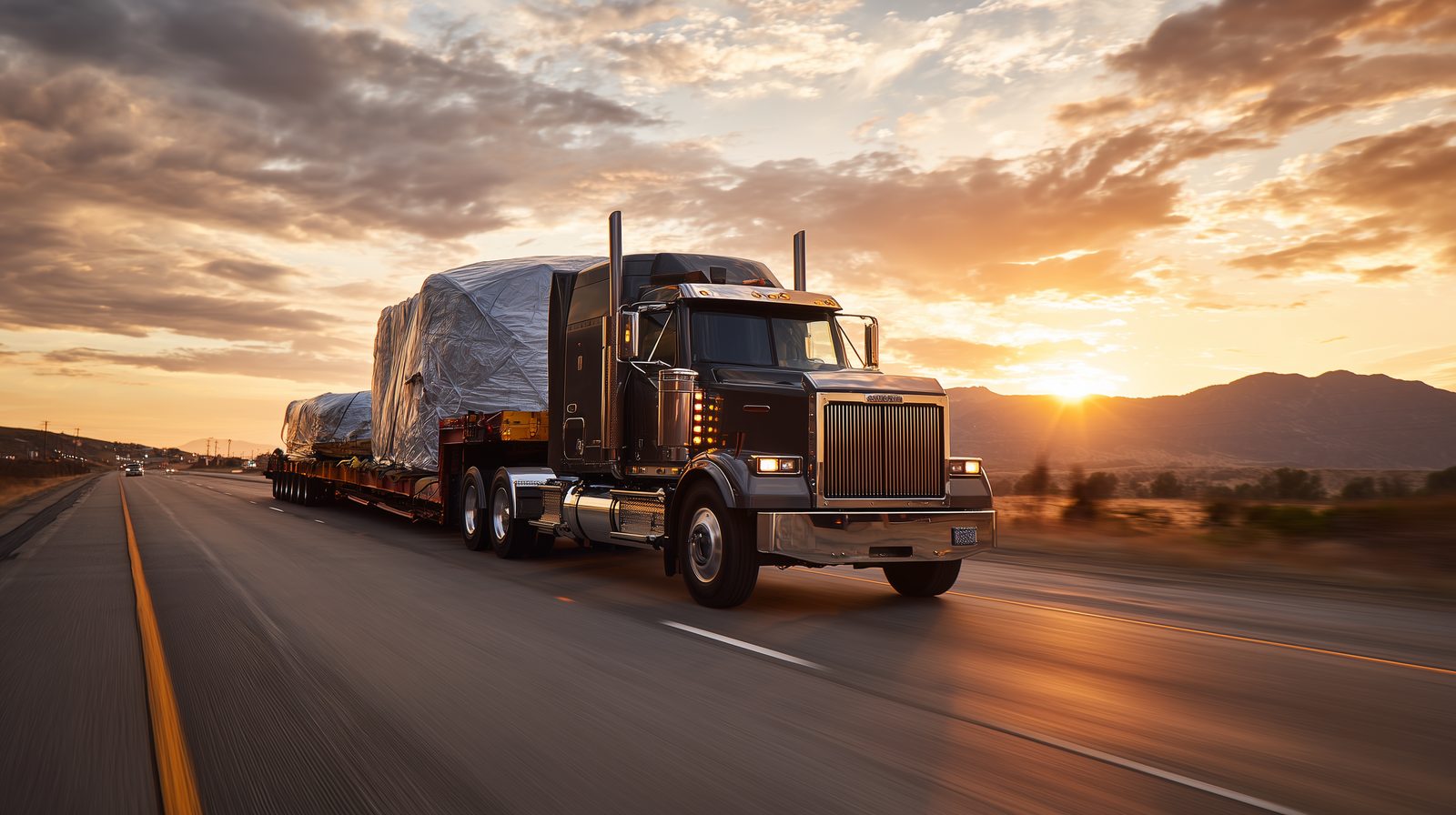
The Reality of Running a Permit Company
Running a trucking permit company means you’re never really off the clock. A trucker hauling an oversized transformer from Texas to Ohio doesn’t care that it’s 2 AM when they realize they need a permit for Indiana. A carrier dispatching a heavy haul load on Monday morning needs that overweight permit ready before the wheels start turning. And when DOT pulls somebody over and they’re missing paperwork, “we’ll get to it during business hours” isn’t an answer that helps anybody.
Custom Permits has been in this business since 1977. That’s nearly five decades of processing trip permits, fuel permits, oversize/overweight permits, NY HUT, KYU, and everything else a commercial carrier needs to stay legal on the road. When Barry Harrison bought the company in 2017, he brought decades of his own industry experience — and his son Mike built the EasyPermits platform from scratch so customers could order permits online, anytime, from anywhere.
But even with great software, the operational demands of a permit company are relentless. Customer questions come in at all hours. State portals each have their own quirks and requirements. Permit processing involves dozens of detail-specific steps where one wrong weight or one wrong date can mean real problems for a real trucker with a real load.
That’s where AI agents came in — not to replace the team, but to make sure no customer ever waits longer than they have to.
What AI Agents Actually Do at Custom Permits
When people hear “AI agents,” they usually picture a chatbot that gives canned answers. What we’re running is fundamentally different. These agents work like autonomous team members — they monitor, act, and escalate on their own. They know our permit types, our processes, and our customers.
Here’s what that looks like day-to-day:
Customer Support That Never Sleeps

A trucker calling at 6 AM because they need a trip permit for a load leaving at noon doesn’t want to leave a voicemail. They want answers, and they want them now.
Our AI agent handles the majority of routine support requests directly — permit status checks, general questions about what permits are needed for specific routes, help navigating the EasyPermits portal, and guidance on documentation requirements. It knows the difference between a trip permit and an IFTA fuel permit. It knows that New York’s HUT has different rules than Kentucky’s KYU. It knows which states require escorts for oversize loads and which ones don’t.
For anything that requires human judgment — a complex multi-state superload, a pricing question, an upset customer — the agent escalates immediately with full context. Not “customer has a question” but “Carrier XYZ Transport needs an overweight permit for a 120,000 lb transformer from Houston to Columbus, crossing Arkansas, Tennessee, and Kentucky. They need to be rolling by Wednesday. Insurance is on file. Recommended action: process AR, TN, KY overweight permits, check route restrictions for I-40 bridge limits.”
That escalation means the team can make a decision in two minutes instead of spending ten minutes gathering background information.
After-Hours Coverage
Custom Permits’ team works 7:30 AM to 6:00 PM Eastern, Monday through Friday. Trucking doesn’t stop at 6 PM.
Before AI agents, after-hours messages just waited until morning. Now, when a customer reaches out at 10 PM or on a Saturday, they get a response within minutes. The agent can handle status checks, answer questions, take in new permit requests with all the details gathered up front, and even help customers place orders through EasyPermits on their own.
For genuinely urgent situations — a trucker stuck at a weigh station needing documentation, a time-critical compliance issue — the agent knows to escalate immediately to the on-call team member rather than letting it sit.
The result: no customer message goes unanswered for more than 15 minutes, even at 3 AM on a Sunday.
Prospecting and Outreach
Finding new customers in trucking is all about understanding their specific pain points. A heavy haul company has completely different permit headaches than a regional LTL carrier. A construction equipment hauler deals with oversize permits constantly. A fleet running the Northeast corridor needs NY HUT and KYU on a regular basis.
Our AI agent researches prospects, understands what kind of fleet they’re running, and drafts personalized outreach that speaks directly to their likely permit challenges. No generic marketing templates — every message is specific to that carrier’s situation.
The agent doesn’t close deals. That’s a human conversation. But by the time a prospect responds with interest, all the research is done and the team can focus on whether Custom Permits is actually the right fit — not on gathering basic information about the carrier’s operation.
Development and Platform Improvements

Mike built EasyPermits from the ground up, and it’s constantly evolving based on what customers need. AI agents participate directly in the development workflow — reviewing code changes, running tests, flagging potential issues, and handling routine maintenance.
When a code change affects something customer-facing — the permit ordering flow, how status updates display, anything that touches the experience a trucker has when they come to order — the agent flags it for human review before it ships. The agents build. The humans make the architectural decisions and approve the changes.
What We’ve Learned Running AI Agents in a Real Permit Operation
Getting the Details Right Is Everything
In trucking permits, details aren’t optional. The wrong weight on an overweight permit means a trucker can get fined — or worse, have their load shut down. A wrong date means the permit’s invalid when they need it. A wrong route on an oversize permit can send a trucker down a road where their load won’t clear a bridge.
Our agents operate under strict rules: they verify every detail before entering anything into the system. If something looks uncertain — a weight that doesn’t match the vehicle configuration, a route that seems unusual, dates that don’t line up — the agent stops and asks rather than guessing. A delayed permit is infinitely better than a wrong one.
The Human-Agent Boundary Is Clear
There are things our agents handle autonomously and things that always go to the team:
Agents handle: Status checks, general permit questions, after-hours intake, EasyPermits guidance, routine support, prospect research, code reviews.
Humans handle: Complex multi-state permits, superloads requiring DOT coordination, pricing decisions, refund requests, upset customers, anything involving legal interpretation, and all final approval on permit submissions.
That boundary isn’t about what the AI could theoretically do — it’s about what we’re confident enough to let it do when someone’s livelihood is on the line.
Monitoring and Safety Aren’t Afterthoughts
When an AI agent makes a mistake, it can repeat that mistake over and over without knowing it’s wrong. That’s why our agents are managed by Associates AI, who handles all the infrastructure, monitoring, and safety guardrails.
Every agent action is logged. Escalation patterns are reviewed. Anomalous behavior triggers alerts. The agents can’t modify their own configuration, can’t share customer data across contexts, can’t make pricing promises, and can’t store credentials in plaintext. These aren’t suggestions — they’re hard constraints enforced at the infrastructure level.
Why We Chose Managed AI Operations
The honest answer? We’re a permit company, not an AI company.
Configuring AI agents, deploying them, keeping them running, updating them when new models come out, making sure they don’t go off the rails — that’s a full-time job. We wanted to focus on what we’re good at: getting truckers the permits they need, fast and right.
Custom Permits’ AI agents are managed by Associates AI. From our perspective, the agents just work. We don’t configure them. We don’t deploy infrastructure. They run on dedicated systems with safety guardrails, monitoring, and continuous updates that we never have to think about.
What’s particularly impressive is how the agents evolve. When they encounter a gap in their capabilities — a workflow that could be smoother, a new type of customer question they’re not handling well — they request the changes themselves through a structured review process. The Associates AI team builds and reviews those changes, making sure the improvement actually serves our customers. Then the change deploys, and the agent is better than it was yesterday.
That feedback loop means our agents keep getting smarter about the permit business without us having to manage the improvement process ourselves.
The Numbers
AI agent adoption is a measurable decision. Here’s what changed at Custom Permits:
-
After-hours response time went from hours to minutes. Customers reaching out at night or on weekends get a real response immediately — not just a “we’ll get back to you” autoresponder.
-
Customer support volume handled without human intervention jumped significantly. Routine questions, status checks, and EasyPermits guidance are handled instantly, freeing the team to focus on complex permits and customer relationships.
-
Prospect research and outreach that used to take hours happens in minutes. Personalized, industry-specific messaging goes out while the team focuses on warm conversations with interested carriers.
-
Development velocity increased. Code reviews, testing, and routine maintenance happen around the clock, so Mike can focus on the features and improvements that actually move the platform forward.
-
Nothing falls through the cracks. The agent runs hourly checks on pending permits, unanswered customer messages, and promises the team made. If something’s overdue, it flags it immediately.
What AI Agents Don’t Replace
It would be dishonest to pretend AI handles everything. It doesn’t, and understanding the limits matters as much as understanding the capabilities.
Agents don’t replace Barry’s decades of permit industry experience — the intuition about which state portal is going to be ornery on a Friday afternoon, or how to handle a carrier who’s been a customer for 20 years and needs something unusual. They don’t replace Britney’s ability to process a complex superload permit that requires coordination with three different state DOTs. They don’t replace the relationships that Custom Permits has built over nearly 50 years, one permit at a time.
Agents don’t handle genuinely novel situations well. A new type of state regulation, an unusual load configuration nobody’s seen before, a customer situation that requires real human empathy — those need people. The agent’s job in those moments is to surface the situation quickly with clear context, not to handle it alone.
What agents do is free up the team’s time so they can exercise that irreplaceable human judgment more often, on the work that matters most. The routine operational volume gets handled. The humans focus on the hard stuff, the relationship stuff, and the decisions that actually move the business forward.
What This Means for Other Small Businesses
Custom Permits isn’t a tech startup. We process trucking permits. Our customers call when they need paperwork to keep their loads moving legally. The operational demands are real and they don’t slow down just because the team goes home for the day.
If you’re running a small business where operational overhead is eating into the time you need for your actual craft — whether that’s permits, logistics, manufacturing, or anything else where getting the details right matters — AI agents are worth serious consideration. Not as a gimmick. Not as a way to cut corners. As a genuine operational tool that lets a small team deliver big-company responsiveness without losing the personal touch that makes small businesses great in the first place.
That’s what Custom Permits has always been about: taking care of truckers like they’re family, one permit at a time. The AI agents just help us do it around the clock.
Need Permits? We've Got You Covered.
Whether you need a single trip permit or manage a fleet running 48 states, Custom Permits has been getting it done since 1977. Order online or give us a call — we'll take care of you.